The Amplifier Circuit Board Is the Core of Any Audio Build
Every great-sounding speaker, home stereo or car audio system has one thing in common: a well-chosen amplifier circuit board. The board takes a weak audio signal, boosts it with a power amplifier chip, and delivers clean, controlled power to your speakers. Whether you are building your first DIY audio project or sourcing components for a product line, understanding how to evaluate an amplifier circuit board will save you both money and frustration.
Amplifier Circuit Board vs. Stereo Amplifier Kit
A bare amplifier circuit board is the engine of the system: a ready-made PCB that combines the amplifier chip, capacitors, resistors and connectors. A stereo amplifier kit bundles that same board together with the parts that turn it into a finished product, such as a metal enclosure, a volume knob, RCA or jack inputs, and often a power adapter. If you already have an enclosure or want maximum flexibility, buy the bare board. If you want a fast, plug-and-play build, a stereo amplifier kit is the quicker route. Either way, the amplifier circuit board inside determines the real performance.
Specifications That Actually Matter
| Specification |
What to Check |
| Amplifier chip |
Class-D chips such as TPA3116 or TPA3110 run cool and efficiently; always check the chip maker's own datasheet for honest ratings |
| Output power |
Look for rated power at a defined load and supply voltage, not peak or "max" marketing numbers |
| Input voltage |
Confirm the DC range, for example DC 8-24 V, matches the power source you plan to use |
| Inputs and outputs |
Decide whether you need stereo RCA, a 3.5 mm jack, or Bluetooth input |
| Protection |
Short-circuit, over-voltage and thermal protection keep the board reliable over time |
Matching a Board to Your DIY Audio Projects
Start from the load, not the wattage. A small bookshelf speaker needs far less power than a subwoofer, and a board rated for an honest 2 x 50 W at 4 ohms will comfortably drive most desktop and shelf builds. Next, match the supply voltage to your available power: a 12 V vehicle system suits vehicle and portable builds, while a 19-24 V laptop-style adapter unlocks the full output of many class-D chips. Finally, think about the input. If your source is a phone or a streaming player, a module with Bluetooth built in removes a whole layer of extra wiring.
Quality and Certification Checklist
- Confirm the amplifier chip is genuine and matched to the published rating
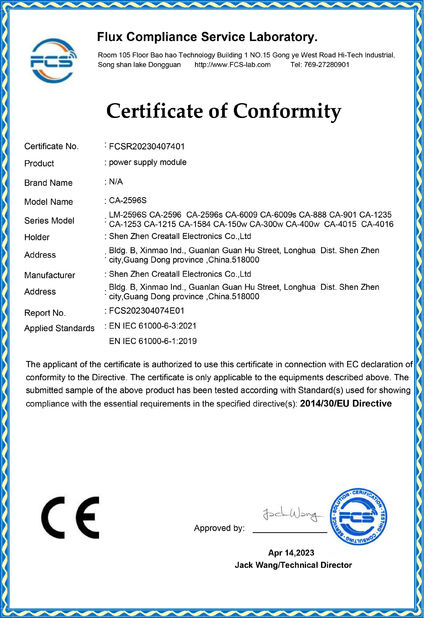
- Look for CE and RoHS compliance for export markets
- Ask about incoming, in-process and outgoing quality inspection gates
- Prefer suppliers who test every board before shipment, not just a sample batch
- Request the datasheet and, where possible, a real test report
A reputable manufacturer will answer these questions without hesitation. Vague answers about power ratings or certification are a warning sign that the amplifier circuit board will not perform as advertised.
Frequently Asked Questions
Can I run a stereo amplifier kit directly from a car battery? Yes, as long as the board's DC input range covers a nominal 12 V system with headroom for charging voltages, typically up to about 14.4 V.
Do I need a heat sink? Class-D boards are efficient, but high continuous output still benefits from airflow or a small heat sink. Mount the board so the chip is not enclosed in a sealed box.
Is a kit worth it over a bare board? If you value your time and want a finished look, a stereo amplifier kit is worth it. If you enjoy custom enclosures, the bare board gives you more freedom.
Buy with Confidence
Choosing an amplifier circuit board does not have to be guesswork. Compare chips, verify honest power ratings, match the supply and inputs to your project, and buy from a manufacturer that documents its quality process. With those basics in place, your next DIY audio project will sound exactly the way you intended.



 Vietnamese